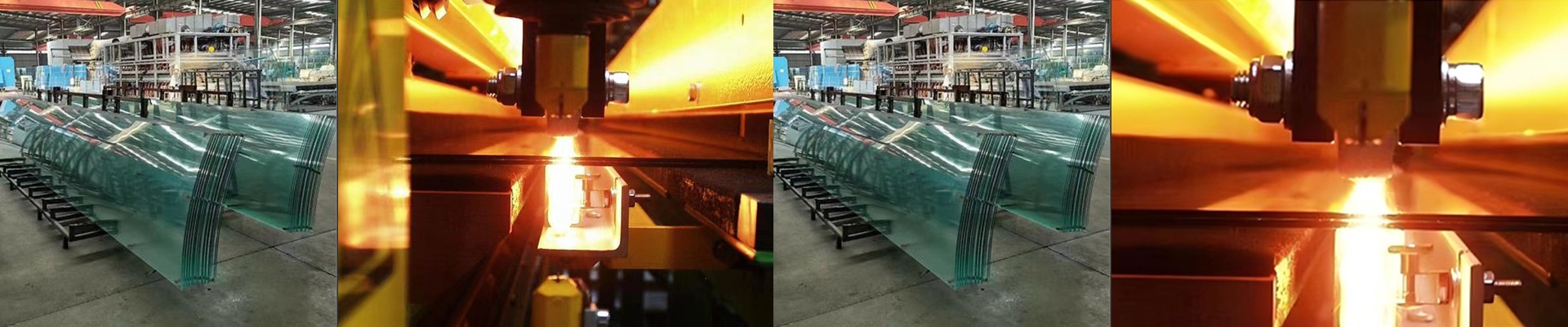
Stop Messing Around with Individual Tubes
Most glass tempering setups start the same way: you buy a bunch of shortwave infrared lamps, grab some sockets, and let your team spend hours wiring them up on the shop floor. It’s a headache. Between the manual labor and the inevitable “cold spots” where the heat just isn’t hitting right, you’re wasting time and risking your product. We decided to fix that. Instead of selling you a pile of parts, we give you curved heating modules that just drop right in.
The Nitty-Gritty of Preheating
To get glass to that softening point before quenching, you need heat—and you need it fast. We use high-wattage quartz halogen lamps to get the job done. By tweaking the voltage and wattage, we control exactly how much heat is hitting the glass. High-density output is great because it chops down your preheating time, but it does put a lot of pressure on your power supply. Just a heads-up: make sure your transformers can handle that initial surge when the arrays kick in, or you’re going to have a bad day.
Why Modules Beat Components
Think of it this way. A single lamp is just a part. A module is a finished system. Our modules pack the lamps, reflectors, and wiring into one pre-assembled curved frame. No more guessing if the alignment is “close enough.” When you slide a turnkey module into place, you don’t have to worry about uneven heating because the spacing is already perfect. We also use industrial-grade connectors. Why? Because these things live in high-heat environments and they need to be tough. We want them to take a beating without burning out at the terminals.
The Trade-off
Nothing is perfect. Moving to a modular system saves you a ton of labor and cuts down your downtime, but you lose a bit of that “tinker” flexibility. Once we build a module to a specific curve and wattage, you can’t just bend it or tweak the geometry on the fly. You’ll need to be sure about your glass dimensions and heating profiles before we start building the frame. If your line is constantly switching between wildly different glass thicknesses or widths, a rigid module might feel a bit restrictive. But for most, the trade-off for a faster, more reliable setup is well worth it.