


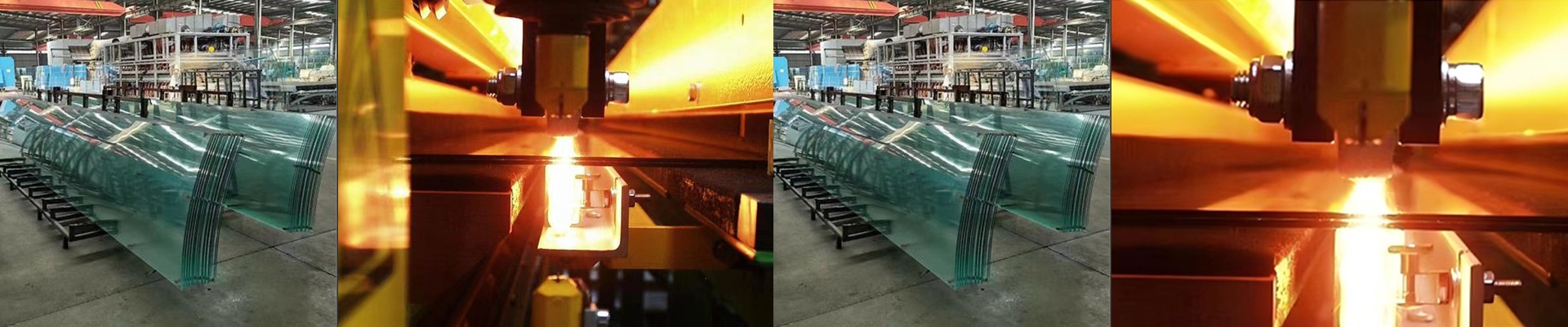

On the line, the surface has to be right. Not close. Right. If the glass isn’t fully dry and brought up to a controlled temperature before coating, lamination, or IG sealing, you’ll pay for it later—blisters in the coating, adhesion headaches in the laminate, weak IG edges, or even spontaneous fractures from thermal stress. When you’re running thousands of square meters per shift, that kind of variability doesn’t show up as one bad sheet. It shows up as scrap, rework, and surprise stops. A glass surface cleaning heater isn’t just a “warmer.” It’s a repeatable thermal step that gets the surface ready for what comes next—without creating new problems.
What actually matters under the hood
These heaters are about controlled radiation and predictable thermal behavior, because glass is sensitive to both temperature and how evenly it’s applied. Quartz short-wave IR elements. Quartz delivers fast response and high power density in a compact footprint. Short-wave IR hits the surface hard and heats the glass directly, instead of dumping energy into the air and the machine. The payoff is a quick ramp, tight process windows, and less wasted heat. Uniformity beats peak temperature. One hot spot doesn’t clean a surface. An uneven thermal field causes differential expansion, and that can lock stress into the glass—especially near edges and cutouts. We design for a uniform profile across the active zone so the whole surface hits the same setpoint within tolerance. Fast response, repeatable control. Glass lines don’t wait. The heater has to hit temperature on schedule and hold it. With quartz IR, the system snaps to new setpoints quickly, so you can keep pace with line speed and maintain consistent conditions from the first sheet to the last. Electrical and mechanical fit, not afterthoughts. Plants have space limits and service realities. The heater module is built to fit common mounting envelopes, with terminals and connectors that match plant standards and machine interfaces. Power is sized to deliver the needed energy density without overloading downstream distribution. Emissivity and how glass responds. Glass behaves differently depending on coatings, tints, and surface finishes. The heater design accounts for typical emissivity behavior in the cleaning/preheat zone, keeping heat delivery stable across the product mix—clear, tinted, coated, or pre-processed.
Why this step earns its keep on the floor
Surface cleaning is temperature-sensitive work. You need enough heat to drive off moisture and keep the surface above dew point, but you can’t be so aggressive that you induce bow, warp, or thermal shock. That’s where a purpose-built glass surface cleaning heater makes the difference. It stabilizes the first process window. As the glass enters the cleaning/preheat stage, the surface temperature rises uniformly. That keeps condensation from re-forming, reduces water spots, and gets the surface ready for the next step—whether it’s coating, adhesive layup for lamination, or laying down the sealant bead on insulating glass. It cuts defects that trace back to surface condition. When the surface is marginal, downstream defects multiply.
- Coating blisters and pinholes often come from trapped moisture.
- Lamination voids can start with inconsistent surface temperature and uneven adhesive flow.
- IG edge defects get worse when the edge runs cooler than the field, changing sealant adhesion and cure. A controlled preheat step removes that variability. It keeps throughput consistent. Fast heating means you don’t have to slow the line down to “make temperature.” The heater comes up quickly after startup and holds steady through long runs, including changeovers. That keeps the schedule moving and cuts startup scrap. It puts energy where it needs to go. Radiant heating is direct. It heats the glass, not the whole room. On a 24/7 line, that shows up in energy use, in lower ambient heat around sensitive equipment, and in better comfort for the operators. It fits into existing lines. Most plants can’t shut down for a redesign. The heater module is built to integrate as a replacement or upgrade within existing cleaning and preheat sections, so you improve performance without scrapping the station.
What you need to know before you spec it
Nothing on a glass line works in isolation, and heating is no exception. Some practical constraints are non-negotiable. Clearances are a hard requirement. Radiant heaters need proper spacing to deliver uniformity and to avoid overheating nearby components. Distance to the glass, element orientation, and airflow all shape the temperature profile. If clearances are tighter than specified, you’re risking uneven heating and higher thermal stress. Reflectors and shielding shape performance. Reflectors focus energy onto the glass; shields protect adjacent parts. Over time, reflectors can oxidize or get coated with airborne residues, and that changes heat distribution. Make reflector condition part of routine uptime, not a surprise failure mode. Control tuning has to match what you run. Different glass types—clear, low-e, tinted, patterned—respond differently to the same heat input. If your product mix is wide, the control strategy needs to be tuned for stability across the range, not just peak performance on one type. The environment matters. Cleaning sections mean water, detergents, and vapor. Electrical connections and insulation have to be protected from direct wash-down and condensation. Even when the heater is rated for the environment, mounting and sealing details still need to be handled properly. If you’re running glass that has to meet tight optical and mechanical requirements, the surface cleaning heater isn’t an accessory. It’s a process control point. Get temperature right, get uniformity right, and the downstream steps can perform the way they were designed. When you need a glass surface cleaning heater that behaves predictably on the line, we build it around the realities of glass—thermal stress, emissivity, cycle time, and uptime.