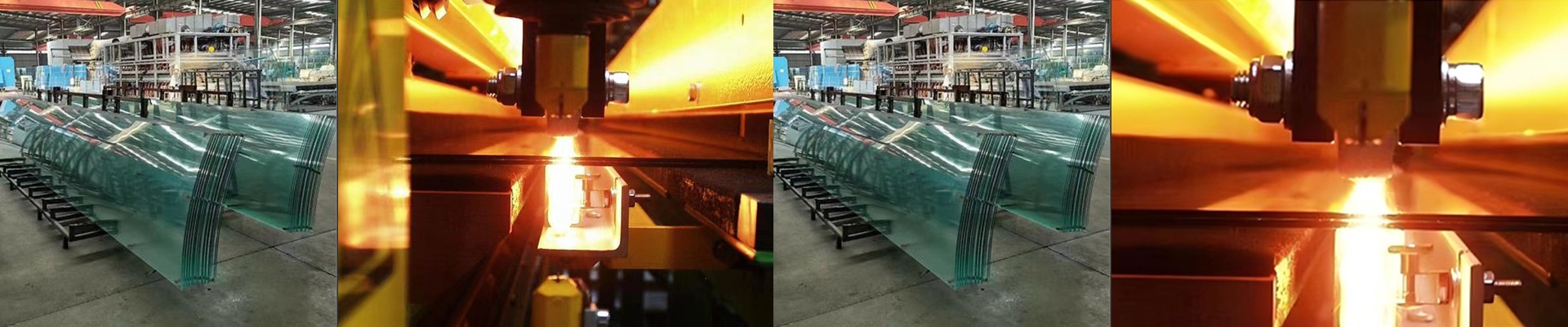

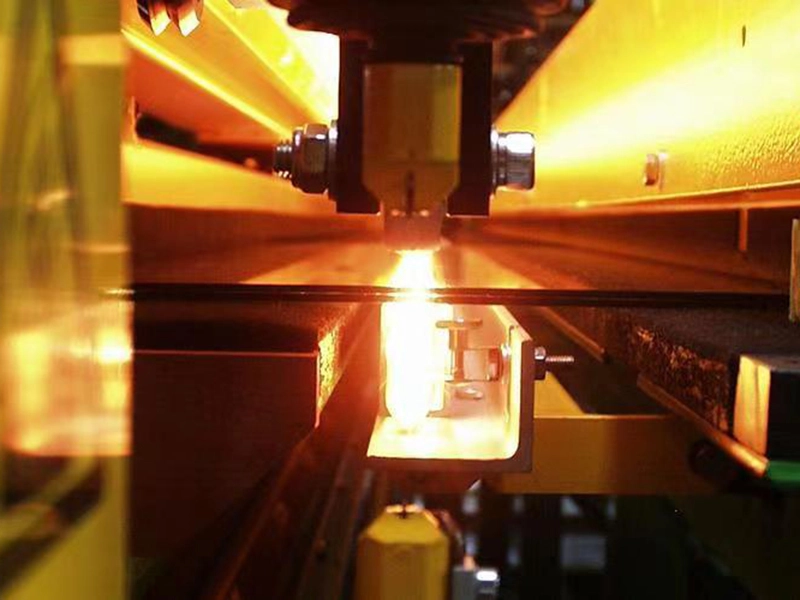
On the glass line, heat isn’t just another setting. It’s the make-or-break variable that separates a pane that clears inspection from one that fails — sometimes catastrophically. When the heater lags, the furnace chases setpoints, bending stations drift off their sag curve, and coating cure windows slip. The shop pays for it in scrap, rework, and schedule pressure. We built our quartz infrared heaters to live with that reality, not fight it. They hold a stable thermal field with tight control, so the line runs the way it was intended — steady, cycle after cycle.
What actually matters under the hood
Quartz infrared heaters aren’t just “another heat source.” They turn electricity into short-wave infrared with high power density and low thermal mass. That means the element spools up fast, cools fast, and answers the control signal directly, without the inertia you get from heavy convection setups. Three behaviors do the heavy lifting:
- **Uniform thermal field:**Quartz tubes emit along their length with predictable intensity. With the right spacing and reflector geometry, you get even heating across the glass, which cuts down hot/cold spots that drive thermal stress and optical distortion.
- **Fast response:**Low thermal inertia lets the heater track setpoint changes in seconds. That matters when tempering needs rapid heat-up for throughput, or when lamination and coating drying demand precise timing.
- **Directional radiation:**Infrared travels line-of-sight, so you put heat where you want it. Less wasted energy, and adjacent components and insulation stay cooler. We also bake in practical details that keep the line running:
- **Element construction:**Quartz tubes with internal coil geometry deliver repeatable radiant output and survive repeated thermal cycling.
- **Terminations:**Industrial terminal blocks and heavy-duty lead wires are spec’d for high current and the vibration you see on glass machinery.
- **Mounting:**Standard mounting centers and bracket options let you drop them into existing fixtures without a custom engineering project on the floor.
- **Control compatibility:**They work with PID and SCR schemes, so you can keep stable closed-loop control across tempering, bending, lamination, and drying zones.
Why this works in real glass processing
Glass doesn’t forgive small temperature deviations. You can see the impact as roller wave, edge stress, or optical distortion. In tempering, uneven heating turns into uneven quench pressure, and the pane bombs impact or optical testing. In bending, a lagging heater makes it hard to hold the sag curve, and shapes start to miss repeatably. In coating and lamination, inconsistent preheat or drying creates adhesion issues and bubbles that only show up later. Quartz infrared heaters go straight at those failure modes.
Tempering and bending
On tempering lines, the furnace has to hit setpoint fast after door cycles and hold uniform temperature across the whole load. Quartz heaters recover quickly, so the furnace gets back to profile sooner — shortening cycle time without sacrificing soak uniformity. In bending, the ability to change heat rapidly helps you match the glass viscosity curve. That gives you repeatable sag control and cleaner edge definition. The payoff is fewer optical defects, better flatness consistency, and higher yield from the same furnace time.
Lamination and coating drying
Lamination needs uniform preheat to activate the interlayer and drive out trapped moisture before pressure is applied. Coating drying needs controlled heat to cure without pinholes, orange peel, or overheating. Quartz infrared provides predictable heat flux you can tune with power density and dwell time. You can push line speed without walking the interlayer or coating outside its thermal window, and you cut rework from adhesion problems and surface defects.
Energy use and maintenance
Because infrared is directional, less heat is lost to heating air and machine structures. That usually lowers energy use per pane, especially compared to convection-heavy systems that have to heat large volumes of air. Maintenance is straightforward. Quartz elements have no moving parts, and the fast response reduces thermal fatigue cycles on the heater body. In practice, service life is long under controlled conditions, and when a replacement is needed, the modular design gets the line back up quickly.
The field realities you plan for
Quartz infrared heaters are tough, but they aren’t set-and-forget. Here are the constraints you need to account for.
- **Line-of-sight and spacing:**Infrared travels directly from element to target. Reflectors matter, and spacing matters. If the glass path changes or the fixture shifts, uniformity changes. We provide recommended spacing and reflector layouts for typical glass thicknesses and line speeds.
- **Thermal management of nearby parts:**These heaters run hot, and insulation, wiring, and sensors nearby need to be rated for the temperature. Use high-temperature leads, keep proper clearance, and add heat shielding where needed.
- **Control tuning:**Fast response is an advantage, but it also means the control loop has to be tuned to avoid overshoot. PID parameters and SCR firing strategies should match the thermal mass of the zone.
- **Environmental exposure:**In coating and drying zones, solvent vapors and particulates can build up on heater surfaces over time. Regular inspection and cleaning keep performance stable.
- **Compatibility:**We design for drop-in fit in many machines, but not every line has the same mounting envelope or electrical interface. Confirm dimensions, voltage, and termination style before ordering. If you run tempering, bending, lamination, coating, or insulating glass sealing, the heating system isn’t background noise — it’s the engine behind your yield. Quartz infrared heaters deliver a thermal field you can count on, response that keeps up with your line, and a build that holds up to daily glass processing. Tell us your line speed, glass sizes, and temperature profile. We’ll match heater output, spacing, and control approach to your process, so the heat works for you, not against you.